How to size a power station for camping, RVs and home backup
Match watt-hours and watts to your use: camping, RV, or home backup. Capacity tiers, recharging, expandability and return terms, with Bluetti picks from the AC180 to the Apex 200.
PulseWizer is reader-supported. We may earn a commission if you buy through links on this page. How we make money.
Bluetti AC180 Portable Power Station
3 products compared in this guide.
The same power station can be perfect for a weekend camping trip and hopeless for a power cut, depending on what you plug in. This guide shows how to size a station for three jobs (camping, RVs and home backup), then picks products from Bluetti. Prices and specifications are from Bluetti's store on 14 November 2026 or as reported by reviewers. We have not tested these products.
Our picks by use
- Camping and everyday backup: Bluetti AC180, 1,152 Wh and 1,800 W, listed at $499.
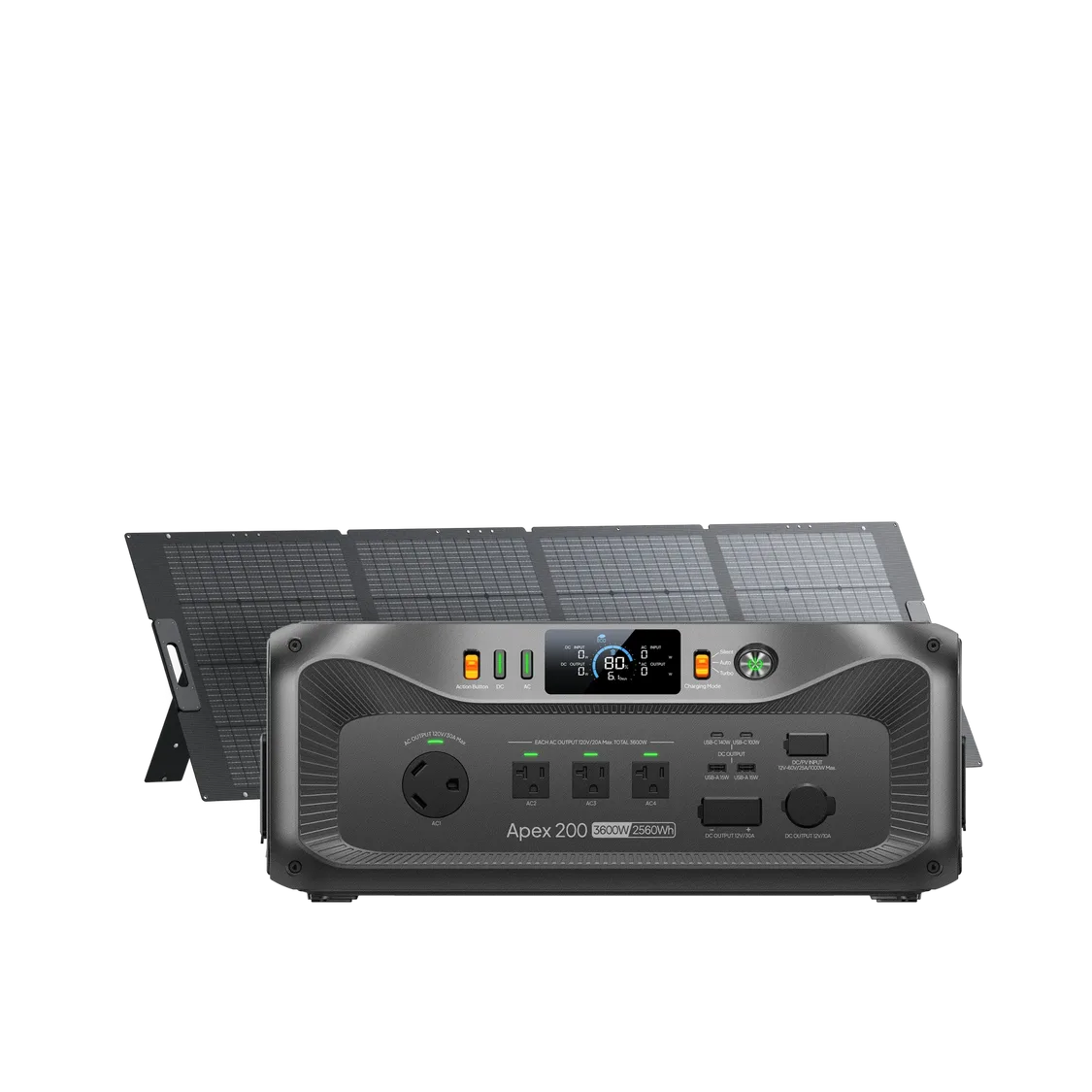
- RVs and larger backup: Bluetti Apex 200, 2,560 Wh and 3,200 W, expandable to 33 kWh.
- Solar charging: pair either with solar panels; the Apex 200 accepts up to 3,000 W of solar input.
How we chose
We looked for stations with published capacity and output, multiple charging methods, expandability and a clear return policy.
Step 1: list the loads
Write down every device, its watts and the hours it must run. A laptop is about 60 W, a mini fridge averages 50 to 100 W, lights and phones are small, a coffee maker or heater can draw 1,000 W or more.
Step 2: total energy needed (Wh)
Multiply watts by hours for each device and add them up, then add 20% for inverter losses. A fridge at 75 W for 24 hours is about 1,800 Wh, which already exceeds the AC180's 1,152 Wh on its own, so a fridge is a job for a bigger station or shorter backup.
Step 3: peak power (W)
Check that the output covers the biggest load. The AC180 provides 1,800 W with a 2,700 W power-lifting mode for resistive loads, which Bluetti describes as lifting output for some appliances. The Apex 200 provides 3,200 W.
Step 4: charging options
Look for AC, solar, car and generator charging. The AC180 recharges 0 to 80% in 45 minutes with 1,440 W of AC input and supports four recharging ways. The Apex 200 supports up to 3,000 W of solar input.
Step 5: expandability
If your needs may grow, choose a platform with expansion batteries. The Apex 200 expands to 33 kWh and supports up to 6 kW of parallel power for home backup and RVs.
Step 6: weight
Capacity is heavy. Reviewers report the AC180 at about 16 kg (35 lb), though another source lists 22 lb. Check the spec sheet and make sure you can carry it where needed.
Step 7: home backup safety
Connecting a station to household wiring needs proper transfer equipment and a qualified electrician. Do not backfeed a home panel.
Step 8: returns
Bluetti offers a 30-day money-back guarantee for items returned complete, unused and in the original package, with return shipping deducted from the refund. Shipping is free, with delivery in about 7 to 10 days after processing.
Our picks in detail
Bluetti AC180
The versatile mid-range choice. See our review.
Bluetti Apex 200
The expandable system for bigger jobs.
Bluetti solar panels
Choose panels to match the station's solar input limit.
Where to buy
See current models and prices at Bluetti. We may earn a commission if you buy through that link, at no extra cost to you. More on the brand in our Bluetti overview, and a general guide to units in our power station buying guide.
FAQ
Can it run a fridge all night?
Usually, depending on the fridge and capacity; calculate it.
Is solar enough to recharge?
Often slower than the rating suggests; use the grid or a car as a backup.